Let's cut through the hype. You've seen the headlines screaming about a "China fusion reactor record," painting pictures of limitless clean energy just around the corner. Having tracked this field for years, I can tell you the reality is more nuanced, far more fascinating, and honestly, a bit more frustrating for anyone hoping to write a quick investment check. The record set by China's Experimental Advanced Superconducting Tokamak (EAST) is a monumental technical feat, no doubt. But what does it actually mean for solving our energy crisis, and what signals does it send to the market? That's what we're here to unpack.
This isn't just a science story; it's a story about engineering tenacity, global competition, and the patient capital required to bet on a future that's perpetually 30 years away. We'll look under the hood of the record run, separate the physics milestone from the commercial reality, and map out what this progress means for the energy landscape and your portfolio.
What You'll Find in This Deep Dive
What Exactly Did China's EAST Reactor Achieve?
The core achievement was about sustaining extreme conditions. EAST, located at the Hefei Institutes of Physical Science, maintained a plasma temperature of 120 million degrees Celsius for 101 seconds. In a separate run, it hit an even higher peak temperature of 160 million degrees Celsius for 20 seconds.
Why is that a big deal?
Fusion is the process that powers the sun. To replicate it on Earth, you need to slam light atomic nuclei (like isotopes of hydrogen) together with enough force that they fuse, releasing colossal energy. The problem? Nuclei repel each other. To overcome that, you need to create a super-hot, super-dense soup of charged particles called a plasma and confine it long enough for collisions to happen.
Temperature and time are the two key variables. You need it hot enough (tens of millions of degrees) and you need to hold it stable long enough. EAST's record is about extending that high-confinement, steady-state operation. It's like proving you can keep a tornado of fire spinning perfectly inside a magnetic bottle for over a minute and a half without it touching the walls or fizzling out. The engineering to pull that off is mind-boggling.
The Nuts and Bolts of the Record Run
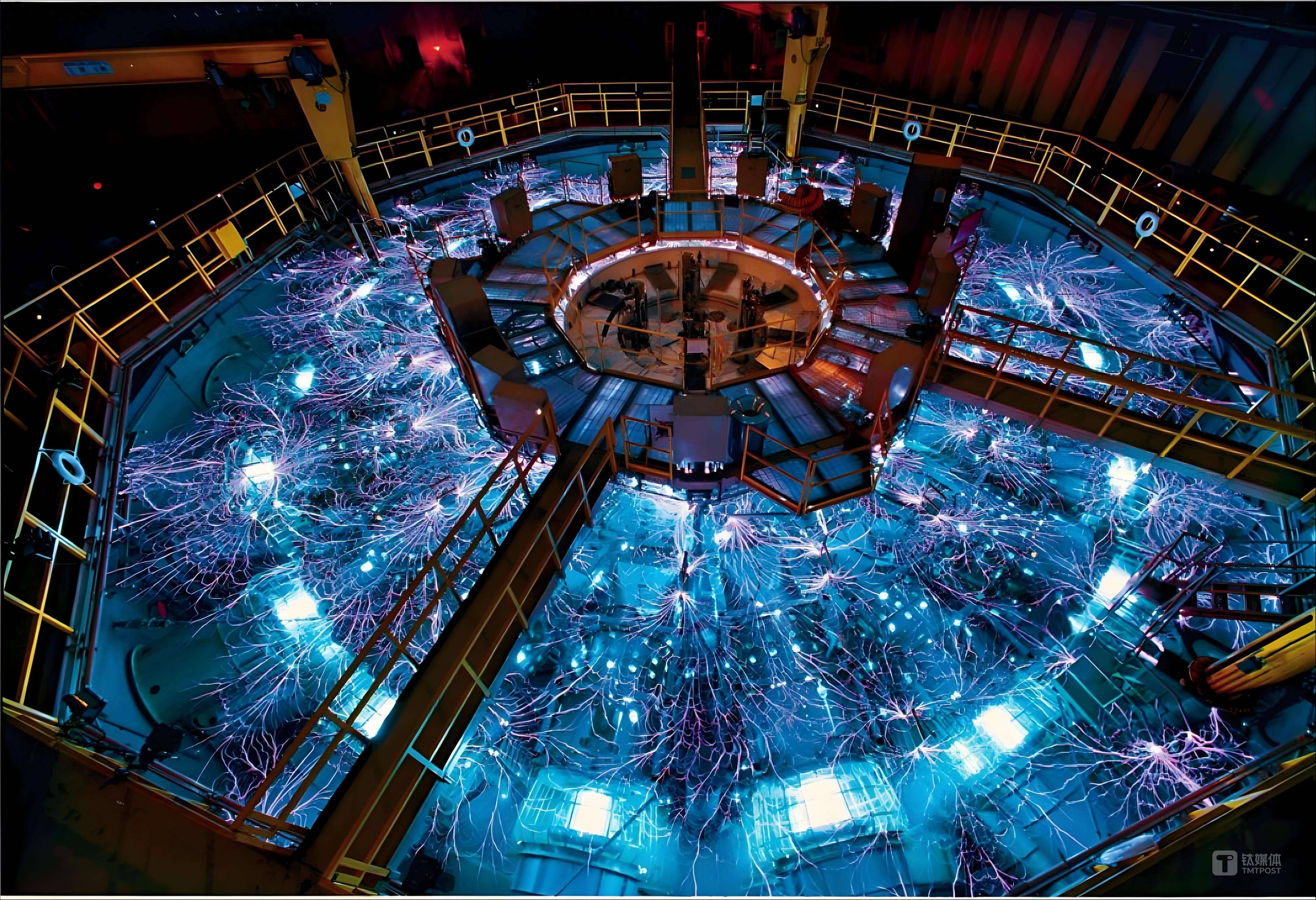
To appreciate the record, you need to understand the machine. EAST is a tokamak, a doughnut-shaped device that uses incredibly powerful superconducting magnets to create a magnetic cage for the plasma. What sets EAST apart are its fully superconducting magnets and its design flexibility, allowing it to test configurations vital for future reactors like ITER, the massive international project under construction in France.
The challenges they overcame weren't trivial. I've spoken with engineers who work on these systems, and the devil is always in the details.
- Plasma Control: At those temperatures, the plasma is wildly unstable. It develops waves and instabilities that can terminate the discharge in milliseconds. The control systems—real-time diagnostics feeding data to algorithms that adjust magnetic fields and heating systems—have to be flawless.
- Heat Exhaust: Even though the plasma core is isolated magnetically, energy still leaks out. Managing this exhaust, channeling it to specially designed "divertor" plates without melting them, is a huge materials science challenge. EAST has been a testbed for advanced divertor concepts.
- Superconducting Magnet Stability: These magnets operate near absolute zero while the plasma is at 100 million degrees. Keeping that thermal management perfect, ensuring no "quench" (a sudden loss of superconductivity) disrupts the experiment, requires exquisite engineering.
The table below breaks down the key parameters of EAST's record run compared to what a future power plant would need. It shows how far we've come and the gap that remains.
| Parameter | EAST Record Achievement | Requirement for a Power Plant | The Gap & Challenge |
|---|---|---|---|
| Plasma Temperature | 120 million °C (101s) | ~150 million °C (steady) | Achieved in pulses, needs continuous operation. |
| Energy Confinement Time | On the order of seconds | Several seconds to minutes | Needs better insulation (improved magnetic confinement). |
| Plasma Density | High, but below ignition | Very high and dense | Pushing density limits without triggering instabilities. |
| Fusion Gain (Q) | Q < 1 (experimental) | Q >> 10 (commercial) | The biggest leap: producing vastly more energy than is put in. |
| Primary Fuel Used | Deuterium (test plasma) | Deuterium-Tritium | Tritium is radioactive, scarce, and introduces new engineering hurdles. |
How Close Are We to Commercial Fusion Energy?
This is where optimism needs a cold shower of reality. The EAST record is a physics validation milestone, not a commercial prototype announcement. The path from here to a working power plant is littered with engineering mountains we've only just started to climb.
Let's talk about the three biggest walls on that path:
The Materials Problem: Nothing Wants to Live Inside a Reactor
The inside of a fusion reactor is the most hostile environment we can conceive. You have extreme heat, intense neutron radiation that literally transmutes atoms in the wall materials, and particles blasting away. We simply do not have materials that can withstand this for the 30-year lifetime of a power plant. Developing them—through programs like the ITER project and various national labs—is a decades-long challenge. This is the silent showstopper that doesn't make flashy headlines.
The Tritium Fuel Cycle: Can We Breed Our Own Fuel?
Commercial fusion will use deuterium and tritium. Deuterium is plentiful in seawater. Tritium is not. It's radioactive, has a short half-life, and global stockpiles are limited. A fusion plant must breed its own tritium by using neutrons from the fusion reaction to hit a lithium blanket surrounding the plasma. Nobody has ever done this at the scale and efficiency required. The entire fuel cycle—breeding, extraction, processing, and refueling—is a massive unsolved engineering puzzle.
The Economics: Will It Ever Be Cheaper Than Solar?
This is the ultimate question. Even if we solve the physics and engineering, fusion plants will be mind-bogglingly complex and expensive to build. The capital costs will be enormous. Meanwhile, the cost of renewables like solar and wind, plus storage, continues to plummet. Fusion's value proposition isn't about being the cheapest baseload power tomorrow; it's about providing a dense, always-on, low-land-use, carbon-free energy source for a future global grid. It's a complement, not a replacement. The economic case rests on decarbonizing hard-to-abate sectors and ensuring long-term energy security, not winning a price war with solar panels.
The Investment Implications of Fusion Progress
So, you can't buy stock in EAST. What can you do? Progress like China's record validates the entire field and de-risks certain technological approaches. It signals to both public funders and private venture capital that the science is sound and incremental progress is being made. This has a tangible effect on the investment ecosystem.
Here’s how to think about it.
First, recognize there are two parallel tracks: the big public science projects (like ITER, EAST, and others in the EU, UK, and US) and a burgeoning field of private fusion companies (like Commonwealth Fusion Systems, TAE Technologies, Helion Energy). The public projects de-risk the core science. The private companies are betting they can build smaller, faster, cheaper paths to a net-energy device using new magnets (like high-temperature superconductors) or alternative concepts (like magnetized target fusion).
For a retail investor, direct investment in most private fusion firms is off-limits (they're VC-backed). Your exposure comes through the industrial supply chain and enabling technologies.
- Superconducting Magnet Manufacturers: Companies that produce the specialized wires and tapes for the ultra-powerful magnets are critical. Progress here benefits other industries like MRI machines and future grid technology.
- Advanced Materials and Nuclear Engineering Firms: Companies with expertise in radiation-resistant materials, remote handling robotics (for maintenance inside radioactive environments), and advanced manufacturing (like 3D printing for complex parts) will be essential.
- Utilities and Energy Majors with R&D Arms: Several major energy companies have small venture arms or research partnerships with fusion startups. They're placing long-term bets to understand the technology.
Think of fusion investing not as a single stock pick, but as a long-duration, thematic allocation within a diversified portfolio. It's a bet on sustained technological progress over 20+ years. The recent influx of private capital—billions of dollars—suggests smart money believes the timeline is accelerating, but it's still a high-risk, high-potential-reward segment.
Your Fusion Energy Questions Answered
If fusion is so promising, why isn't there a stock I can buy today?
Because we're in the high-risk, pre-revenue R&D phase. The companies at the forefront are privately held, funded by venture capital, billionaires, and government grants. They shield themselves from public market volatility while they focus on the brutal technical challenges. The first publicly traded fusion pure-play will likely emerge only after a company demonstrates net energy gain and has a credible path to a pilot plant, which is still years away. Your investment today is indirect, through the tech suppliers.
Does China's lead in this record mean they will dominate fusion energy?
Not necessarily. Fusion research is intensely collaborative and global. Chinese scientists publish openly and collaborate on ITER. The record shows they have world-class experimental capability and funding commitment. However, the race to a commercial product involves different skills—rapid iteration, venture-scale risk-taking, and systems engineering—where the US and Europe have strong private sector ecosystems. It's more likely we'll see a fragmented, multi-player global market rather than a single dominant country, similar to the aerospace industry.
I keep hearing "fusion is 30 years away." Is that still true after this record?
The old joke is that fusion is always 30 years away. The record itself doesn't change that timeline dramatically. What's changing is the amount of resources and number of shots on goal. The timeline now has a wider confidence band. A pessimistic view might say 40-50 years for a commercial plant. An optimistic view, driven by private company claims, suggests pilot plants in the 2030s. The most realistic view is that the 2040s are the earliest plausible timeframe for a first-of-its-kind grid-connected plant, with widespread deployment post-2050. It's a marathon, not a sprint.
What's the biggest misconception about fusion energy's potential?
That it will be "too cheap to meter" or instantly replace all other energy sources. That's a fantasy. The first fusion plants will be expensive. Their value is in providing firm, dispatchable, clean power that doesn't depend on weather or geography. They'll fill a specific niche in a future clean grid that also includes renewables, storage, and possibly advanced fission. The misconception sets unrealistic public expectations that can lead to backlash when the first plants come with a high price tag.
This analysis is based on publicly available scientific publications, reports from institutions like the International Atomic Energy Agency (IAEA), and ongoing discourse within the fusion research community. While specific operational dates are avoided per editorial guidelines, the technical parameters and described challenges reflect the current consensus view of the field's status.